
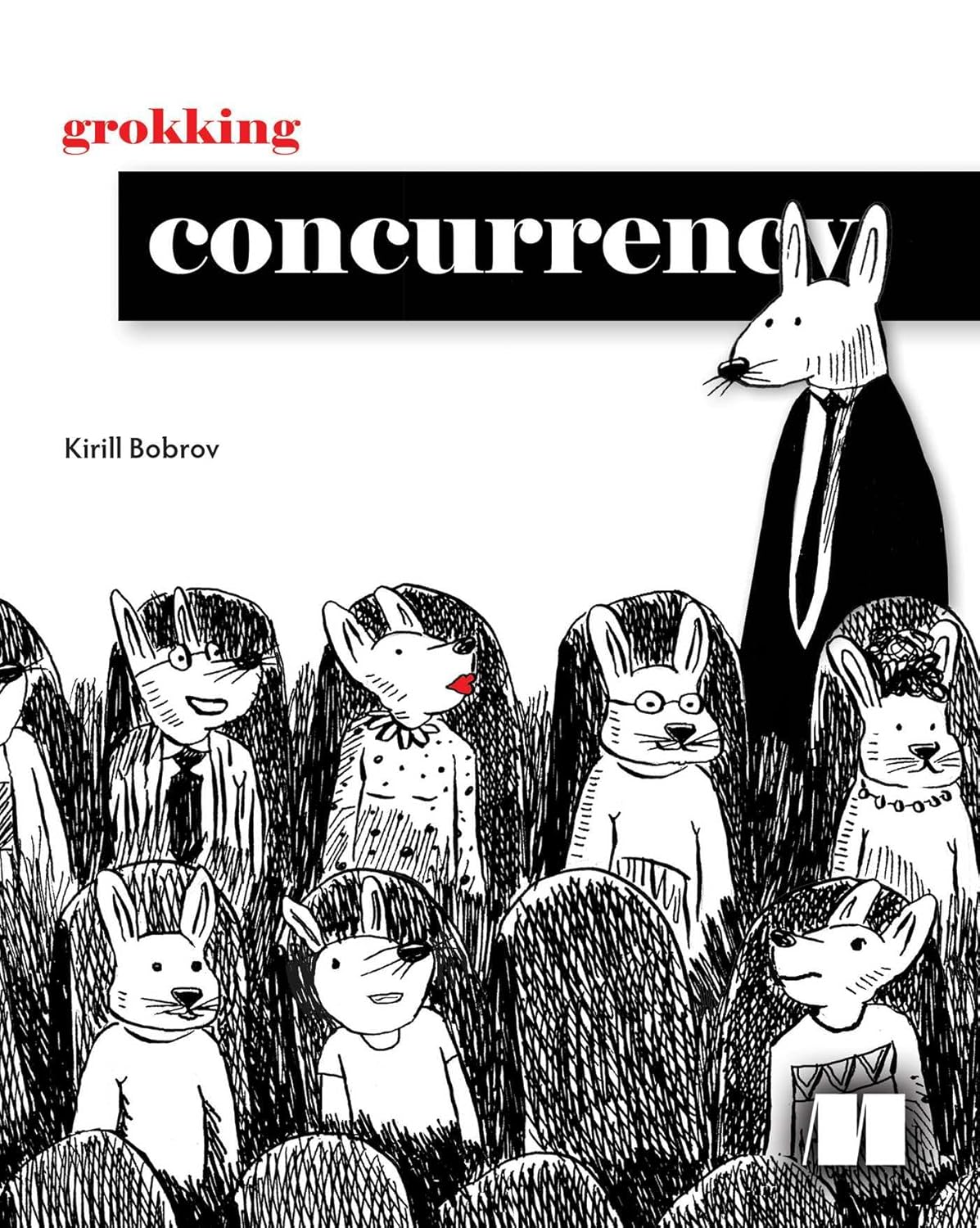
Grokking Concurrency
Original price was: $49.99.$41.99Current price is: $41.99.
Related Products



[ad_1]
This easy-to-read, hands-on guide demystifies concurrency concepts like threading, asynchronous programming, and parallel processing in any language.
Perplexed by concurrency? Don’t be. This engaging, fully-illustrated beginner’s guide gets you writing the kind of high-performance code your apps deserve. Inside, you’ll find thorough explanations of concurrency’s core concepts—all explained with interesting illustrations, insightful examples, and detailed techniques you can apply to your own projects.
In Grokking Concurrency you will:
Get up to speed with the core concepts of concurrency, asynchrony, and parallel programmingLearn the strengths and weaknesses of different hardware architecturesImprove the sequential performance characteristics of your softwareSolve common problems for concurrent programmingCompose patterns into a series of practices for writing scalable systemsWrite and implement concurrency systems that scale to any size
Discover effective concurrency practices that will help you leverage multiple cores, excel with high loads, handle terabytes of data, and continue working after hardware and software failures. The core concepts in this guide will remain eternally relevant, whether you’re building web apps, IoT systems, or handling big data.
Purchase of the print book includes a free eBook in PDF and ePub formats from Manning Publications.
About the technology
Concurrency is an approach to running computer programs efficiently by separating them into tasks that can execute independently. This basic idea makes it possible to accelerate game graphics, train large AI models, rapidly scale web applications, streamline big data processing, and much more. Concurrency can get complicated, so this book gets you started gently with interesting examples, entertaining illustrations, and easy-to-follow Python code.
About the book
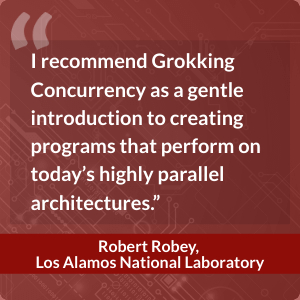
Grokking Concurrency is a perfectly paced introduction to the fundamentals of concurrent, parallel, and asynchronous programming. In it, you’ll learn the practices you’ll need to program multicore processors, GPUs, and other high-performance systems. Author Kirill Bobrov skips the math, jargon, and academic language and concentrates on clear, plain-English explanations.
What’s inside
Writing and running concurrent programsPatterns for performance, scalability, and resilienceChoosing the right hardwareAsynchronous communication
About the reader
Examples in Python. No prior experience with concurrency or high-performance computing required.
About the author
Kirill Bobrov is a software engineer with a passion for data engineering.
Table of Contents
Part 1 The Octopus Orchestra: Introduction to a Symphony of Concurrency
1 Introducing concurrency
2 Serial and parallel execution
3 How computers work
4 Building blocks of concurrency
5 Interprocess communication
Part 2 the Many Tentacles of Concurrency: Multitasking, Decomposition,
and Synchronization
6 Multitasking
7 Decomposition
8 Solving concurrency problems: Race conditions and synchronization
9 Solving concurrency problems: Deadlocks and starvation
Part 3 Asynchronous Octopuses: a Pizza-making Tale of Concurrency
10 Nonblocking I/O
11 Event-based concurrency
12 Asynchronous communication
13 Writing concurrent applications
From the Publisher


Publisher : Manning
Publication date : February 6, 2024
Language : English
Print length : 304 pages
ISBN-10 : 1633439771
ISBN-13 : 978-1633439771
Item Weight : 1.1 pounds
Dimensions : 7.38 x 0.5 x 9.25 inches
Best Sellers Rank: #226,206 in Books (See Top 100 in Books) #76 in Computer Programming Languages #80 in Microsoft Programming (Books) #139 in Python Programming
Customer Reviews: 4.5 4.5 out of 5 stars (17) var dpAcrHasRegisteredArcLinkClickAction; P.when(‘A’, ‘ready’).execute(function(A) { if (dpAcrHasRegisteredArcLinkClickAction !== true) { dpAcrHasRegisteredArcLinkClickAction = true; A.declarative( ‘acrLink-click-metrics’, ‘click’, { “allowLinkDefault”: true }, function (event) { if (window.ue) { ue.count(“acrLinkClickCount”, (ue.count(“acrLinkClickCount”) || 0) + 1); } } ); } }); P.when(‘A’, ‘cf’).execute(function(A) { A.declarative(‘acrStarsLink-click-metrics’, ‘click’, { “allowLinkDefault” : true }, function(event){ if(window.ue) { ue.count(“acrStarsLinkWithPopoverClickCount”, (ue.count(“acrStarsLinkWithPopoverClickCount”) || 0) + 1); } }); });
[ad_2]
6 reviews for Grokking Concurrency
Be the first to review “Grokking Concurrency”

Original price was: $49.99.$41.99Current price is: $41.99.
There are no reviews yet.