Sale!

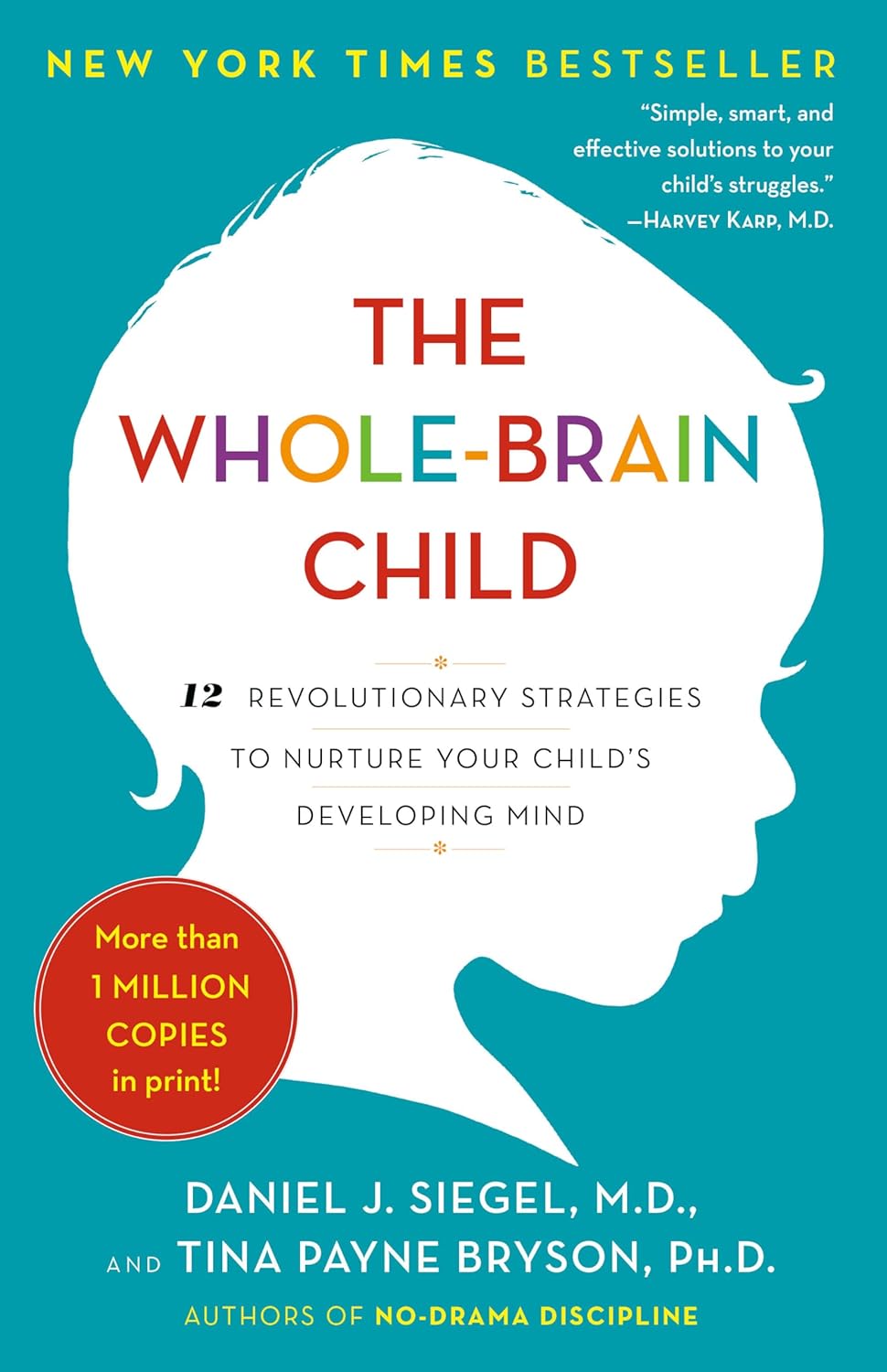
The Whole-Brain Child: 12 Revolutionary Strategies to Nurture Your Child’s Developing Mind

Add your review

Original price was: $19.00.Current price is: $10.65.

Original price was: $19.00.Current price is: $10.65.

Sale!

Note: Prices may fluctuate as sellers adjust them regularly. You'll see the latest price at final checkout.
Add to wishlistAdded to wishlistRemoved from wishlist 0
Add to compare


NEW YORK TIMES BESTSELLER • The authors of No-Drama Discipline and The Yes Brain explain the new science of how a child’s brain is wired and how it matures in this pioneering, practical book.
“Simple, smart, and effective solutions to your child’s struggles.”—Harvey Karp, M.D.
In this pioneering, practical book, Daniel J. Siegel, neuropsychiatrist and author of the bestselling Mindsight, and parenting expert Tina Payne Bryson offer a revolutionary approach to child rearing with twelve key strategies that foster healthy brain development, leading to calmer, happier children. The authors explain—and make accessible—the new science of how a child’s brain is wired and how it matures. The “upstairs brain,” which makes decisions and balances emotions, is under construction until the mid-twenties. And especially in young children, the right brain and its emotions tend to rule over the logic of the left brain. No wonder kids throw tantrums, fight, or sulk in silence. By applying these discoveries to everyday parenting, you can turn any outburst, argument, or fear into a chance to integrate your child’s brain and foster vital growth.
Complete with age-appropriate strategies for dealing with day-to-day struggles and illustrations that will help you explain these concepts to your child, The Whole-Brain Child shows you how to cultivate healthy emotional and intellectual development so that your children can lead balanced, meaningful, and connected lives.
“[A] useful child-rearing resource for the entire family . . . The authors include a fair amount of brain science, but they present it for both adult and child audiences.”—Kirkus Reviews
“Strategies for getting a youngster to chill out [with] compassion.”—The Washington Post
“This erudite, tender, and funny book is filled with fresh ideas based on the latest neuroscience research. I urge all parents who want kind, happy, and emotionally healthy kids to read The Whole-Brain Child. This is my new baby gift.”—Mary Pipher, Ph.D., author of Reviving Ophelia and The Shelter of Each Other
“Gives parents and teachers ideas to get all parts of a healthy child’s brain working together.”—Parent to Parent


From the Publisher
Cultivate healthy development so that children can lead balanced, meaningful, and connected lives.Cultivate healthy development so that children can lead balanced, meaningful, and connected lives.

Cultivate healthy development so that children can lead balanced, meaningful, and connected lives.Cultivate healthy development so that children can lead balanced, meaningful, and connected lives.

Daniel Goleman says Anyone who cares for children should read The Whole-Brain ChildDaniel Goleman says Anyone who cares for children should read The Whole-Brain Child

Christine Carter, PH.D. says chock-full of strategies for raising happy, resilient children.Christine Carter, PH.D. says chock-full of strategies for raising happy, resilient children.

ASIN ‏ : ‎ 0553386697
Publisher ‏ : ‎ Bantam
Publication date ‏ : ‎ September 11, 2012
Edition ‏ : ‎ Illustrated
Language ‏ : ‎ English
Print length ‏ : ‎ 192 pages
ISBN-10 ‏ : ‎ 9780553386691
ISBN-13 ‏ : ‎ 978-0553386691
Item Weight ‏ : ‎ 2.31 pounds
Dimensions ‏ : ‎ 5.16 x 0.5 x 8.01 inches
Best Sellers Rank: #1,331 in Books (See Top 100 in Books) #1 in Medical Child Psychology #1 in Popular Child Psychology #3 in Parenting Boys
Customer Reviews: 4.7 4.7 out of 5 stars (20,789) var dpAcrHasRegisteredArcLinkClickAction; P.when(‘A’, ‘ready’).execute(function(A) { if (dpAcrHasRegisteredArcLinkClickAction !== true) { dpAcrHasRegisteredArcLinkClickAction = true; A.declarative( ‘acrLink-click-metrics’, ‘click’, { “allowLinkDefault”: true }, function (event) { if (window.ue) { ue.count(“acrLinkClickCount”, (ue.count(“acrLinkClickCount”) || 0) + 1); } } ); } }); P.when(‘A’, ‘cf’).execute(function(A) { A.declarative(‘acrStarsLink-click-metrics’, ‘click’, { “allowLinkDefault” : true }, function(event){ if(window.ue) { ue.count(“acrStarsLinkWithPopoverClickCount”, (ue.count(“acrStarsLinkWithPopoverClickCount”) || 0) + 1); } }); });

10 reviews for The Whole-Brain Child: 12 Revolutionary Strategies to Nurture Your Child’s Developing Mind

0.0 out of 5
0
0
0
0
0
Write a review
Show all Most Helpful Highest Rating Lowest Rating
  1. Stephanie K.

    game changer for parenting
    This book has changed the way I parent. I have two daughters, 1 and 6 years old. The oldest struggles with elevated levels of anxiety to the point where we decided to have her start chatting with a pediatric therapist to help her (and us) better navigate the tough moments. Her therapist recommends that all parents read this book. I am so thankful that I did. I not only understand more about my daughter’s brain and thought process and emotions, but I also understand more about myself, and how my handling of situations has projected my own anxiety onto her. The good news is that we can actually change our brains by forming new neural pathways, and it’s never too late to start. So you can take situations that normally upset your child (anxiety, fear, anger, violence, hyersilliness, nervousness, inability to focus – truly anything) and use these occurrences to help them form new neural pathways that in turn allow them to better cope with challenges. And it’s helped me in the same way. I’ve noticed I am better able to manage high-anxiety situations in general. This book does an amazing job at explaining just enough of the science to help the concepts make logical sense. For me, this makes them easier to remember and implement. After reading this book, I *get* it. And that makes all the difference in the world when you are in an emotional moment, struggling to best navigate not only your little one’s feelings but also your own. Beyond the concepts, this book provides practical, easy to understand techniques. And darn it if they don’t work. I noticed such a rapid response with my 6-year-old that I started using some of the approaches with my 1-year-old, and there was an immediate response with her as well. Getting such quick and positive feedback makes you excited to keep using the approaches. And it’s really set up to be as easy as possible. There is a helpful “HOW TO USE THIS BOOK” section at the beginning, I’ve included some snippets in my photos. I think this book is a game changer for parenting, and I wish I had read it earlier. I recommend this to any parent, new or veteran.

    Helpful(0) Unhelpful(0)You have already voted this
  2. CherylRR

    Insightful, Practical, and Parenting-Changing
    The Whole-Brain Child gave me tools I didn’t even know I needed. It breaks down complex brain science into simple, relatable strategies that actually help in day-to-day parenting. The techniques for connecting with your child before correcting really work—and they’ve helped reduce meltdowns and build stronger relationships at home. I love the real-life examples, illustrations, and age-specific suggestions. It’s empowering without being overwhelming. Whether you’re a new parent or an experienced one, this book is a must-read for understanding how kids think and feel.

    Helpful(0) Unhelpful(0)You have already voted this
  3. Jacob Anderson

    If you are considering this book, get it.
    This book is absolutely a must have. I have a degree in Christian counseling, and this was one of the texts we read. I was in the field of social work for a while, and I frequently taught from this book. If you think about it, I had a digital copy and ended up buying a physical copy, if that tells you anything. This is a great text for social workers, therapists, and even exasperated moms and dads. It breaks down challenging mental health concepts in an easily understandable way that is not overloaded with jargon. The methods in it work. I cannot recommend this book enough.

    Helpful(0) Unhelpful(0)You have already voted this
  4. MJ14

    Intimidating science, translated beautifully for the common reader, and applied astutely to parent-child interactions.
    This is a very well conceived and executed book, and very worth your time. The authors do a tremendous job of translating neurobiology and cognitive psychology into basic language for a general audience, for use in direct child interactions. Through each of their 12 strategies for understanding and interacting with “The Whole-Brained Child,” the authors begin by describing in an unintimidating manner the portion of the brain and its function that will be subsequently discussed from a behavioral standpoint. From here, they use that behavioral basis and give very detailed examples of how to handle child behavior stemming from the associated biology, referring back to the brain as a reference point rather than as the focus.The point of the book, all science aside, is in dealing with certain child developmental features and behaviors (such as implicit memory, tantrums, fear of failure) by connecting with children directly. The science is used to serve as a backdrop but is a fascinating addition to what otherwise would be a simple behavioral book. Instead of just saying HOW to interact with children, the authors show us WHY, which lends a much greater and more nuanced understanding to the how. This book provides a unique opportunity to read about everyday situations with children and relate them quickly and easily to a neurobiological level.Though the authors say the book can be for direct childcare practitioners (such as teachers and daycare workers), the obvious target is parents. Here there are some issues. The book seems to be written for a white, suburban, middle class parent as opposed to the general population. Additionally, the practicality of some of the strategies is not immediately apparent, and the amount of effort required for many parents will be substantial – a paradigm shift for some ways. The illustrations are helpful in showing the dos and don’ts (not labelled as such, thankfully), but I found myself thinking the don’ts were many parent’s default. The strategies really are a shift in thinking and require a lot of skill and investment to execute, but they are definitely achievable. In no way does this book alienate parents with over-expectations.I also felt some situations I felt were not addressed adequately. Most of the examples of child behavior and parental involvement deal with more mundane, everyday occurrences from the ‘average’ child. If you are interested in how to explain to your child what death is, this book doesn’t venture into those dangerous waters. Nor does it address more difficult children. Additionally, the section of bringing implicit memories to the explicit is somewhat suspect in its claims and its basis, which some may find hypocritical. If implicit memories are necessarily altered as the authors say, why would a parent with altered memories of an incident helping a child reconstruct the child’s own altered memories of that same incident serve to help the child? I wonder too about parental inconsistency when using these strategies. Again, they are intensive and hard to do in the moment the behavior is being exhibited by the child. I do believe these are not major issues, however. The authors’ stress on underlying the importance of connection, integration of thought, and mindset make most of the above manageable simply by establishing a trusting baseline relationship with the child.Overall, I believe the pros of this book outweigh the negatives, though they should be noted. The authors’ ability to successfully and fluently translate incredibly intricate science to the common reader (no college degree seems necessary for reading, but a level of literacy is assumed) is no small feat. It makes me wish more laboratory experiments that have real-world implications can be taken by researchers into the hands of the people that actually need and use them on a daily basis. Parents will find the strategies difficult to implement and will certainly encounter situations not touched upon here, but this is well worth the read. And it won’t take you long…the writing style is easy to follow, the science unobtrusive and accessible, and the situations are often in dialogue-form and wonderfully vivid. Along with the illustrations and a very helpful appendix at the end denoting in which age ranges a parent should expect certain behaviors to manifest in, this book is a win.

    Helpful(0) Unhelpful(0)You have already voted this
  5. Rosiemelisa

    Essential for Every Parent
    This book completely changed how I approach parenting. It breaks down how a child’s brain works and offers clear, effective strategies to help guide them through emotional moments. The techniques are simple, science-backed, and actually work—like “connect and redirect” or “name it to tame it.”It’s written in an easy-to-follow format with helpful examples and visuals. I’ve noticed a real difference in how my child responds and how I stay calmer as a parent. Highly recommend for anyone raising young kids.

    Helpful(0) Unhelpful(0)You have already voted this
  6. マルティナ

    This is an awesome book! It’s an easy, I read it all in two days. The author explains how the brain works in a very easy to understand way and gives many examples and advice on how to use it in every day life with your kids. I got so many tools to help me deal with my kid and help them be more successful and content in the future. Even if you don’t have kids I still think that this book is a good read. Most things I found do not only apply to kids, but also to adults.

    Helpful(0) Unhelpful(0)You have already voted this
  7. hossein

    not informing at all

    Helpful(0) Unhelpful(0)You have already voted this
  8. Renato

    Really Interesting – the book shows a technical view of the brain and its function, full of daily basis examples and at the end has a short summary that can be used during life.

    Helpful(0) Unhelpful(0)You have already voted this
  9. F. Hoffmann

    The Whole-Brain Child explains how kids’ brains work in a way that’s easy to understand and incredibly helpful. The tools and strategies are practical and really make a difference in handling emotional moments with more patience and connection. A thoughtful, empowering read—highly recommended for anyone raising or working with children.

    Helpful(0) Unhelpful(0)You have already voted this
  10. M. Casanova

    J’ai beaucoup aimé ce livre (je l’avais en version numérique mais voulais également la version papier), j’ai l’impression que sa lecture m’aide réellement à mieux comprendre ma fille de 3 ans qui s’énerve beaucoup en ce moment.J’essaie d’appliquer le conseil principal : Connect then redirect” et j’ai l’impression que ça fonctionne. En tout cas cela se passe mieux avec ma fille depuis quelques jours.Je trouve que les conseils sont intéressants et que le fait de savoir que si ma fille s’énerve c’est la plupart du temps parce qu’elle n’arrive pas à comprendre ou savoir comment réagir parce que son cerveau est en cours de construction aide à être plus patiente avec elle.Je voulais la version papier pour pouvoir imprimer les BD et en discuter avec ma fille quand elle sera plus grande

    Helpful(0) Unhelpful(0)You have already voted this

    Add a review

    Your email address will not be published. Required fields are marked *

    The Whole-Brain Child: 12 Revolutionary Strategies to Nurture Your Child’s Developing Mind
    The Whole-Brain Child: 12 Revolutionary Strategies to Nurture Your Child’s Developing Mind

    Original price was: $19.00.Current price is: $10.65.

    bestdealsavvy.com
    Logo
    Compare items
    • Total (0)
    Compare
    0
    Shopping cart