

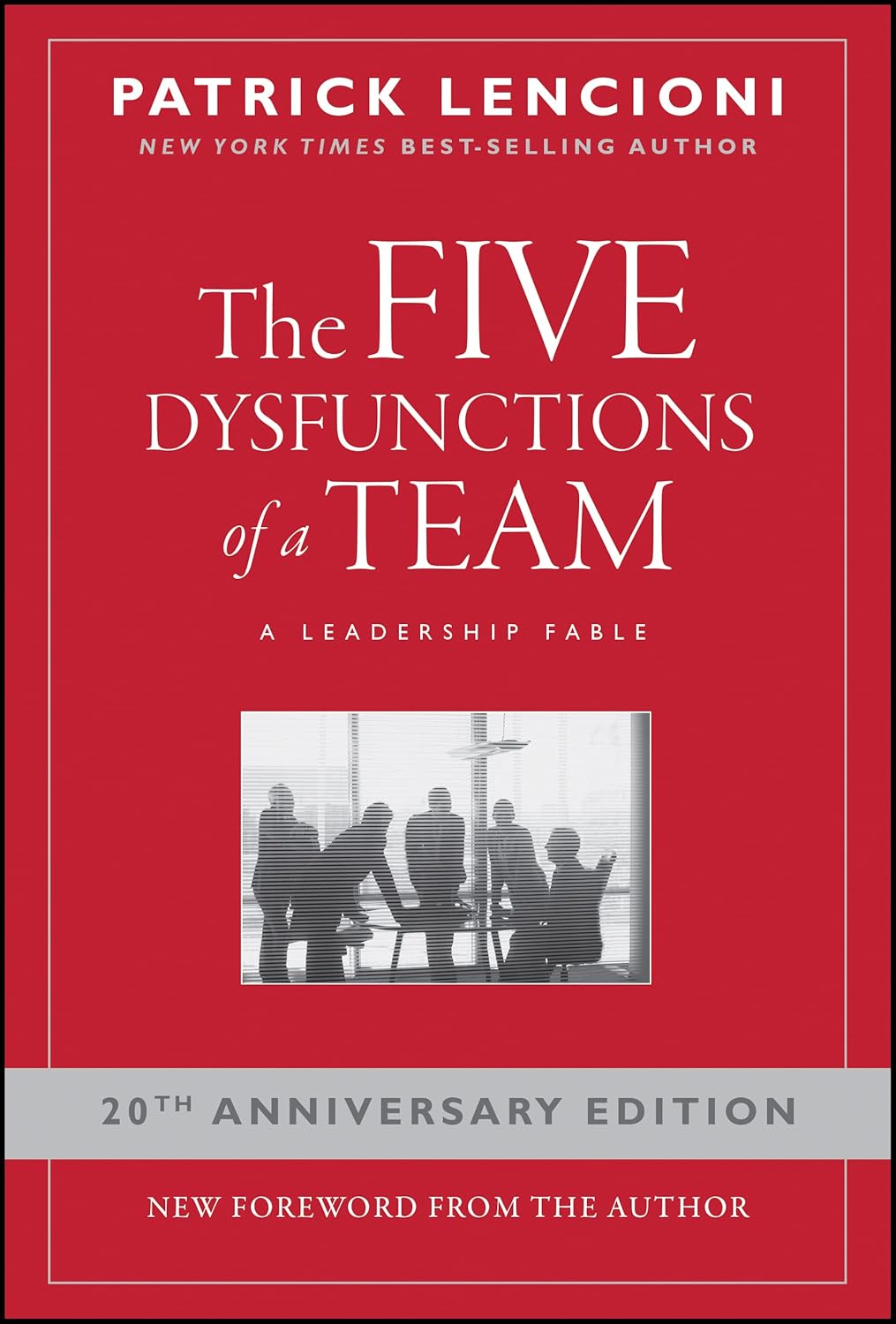
The Five Dysfunctions of a Team: A Leadership Fable, 20th Anniversary Edition
Related Products






The New York Times best-selling team leadership handbook for modern executives, managers, and organizations
After her first two weeks observing the problems at DecisionTech, Kathryn Petersen, its new CEO, had more than a few moments when she wondered if she should have taken the job. But Kathryn knew there was little chance she would have turned it down. After all, retirement had made her antsy, and nothing excited her more than a challenge. What she could not have known when she accepted the job, however, was just how dysfunctional her team was, and how team members would challenge her in ways that no one ever had before.
For twenty years, The Five Dysfunctions of a Team has been engaging audiences with a page-turning, realistic fable that follows the travails of Kathryn Petersen, DecisionTech’s CEO, as she faces the ultimate leadership crisis. She must unite a team in such disarray that it threatens to derail the entire company.
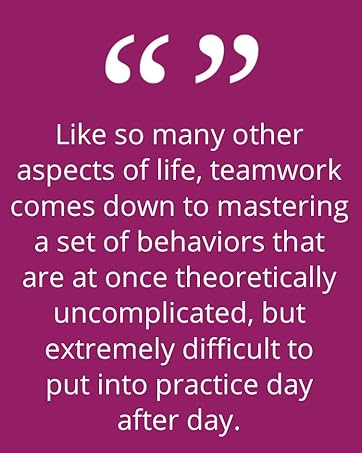
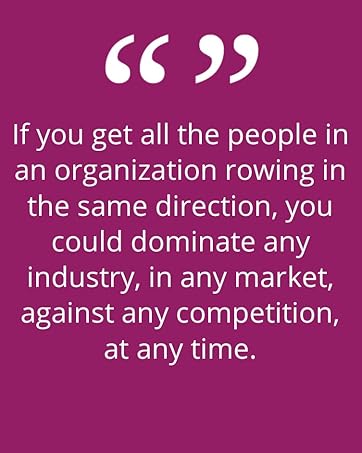
Equal parts leadership fable and business handbook, this definitive source on teamwork by Patrick Lencioni reveals the five behavioral tendencies that go to the heart of why even the best teams struggle. He offers a powerful model and step-by-step guide for overcoming those dysfunctions and getting every one rowing in the same direction.
Today, the lessons in The Five Dysfunctions of a Team are more relevant than ever. This special anniversary edition celebrates one of the best-selling business books of all time with a new foreword from the author that reflects on its legacy and lessons.
From the brand


Patrick Lencioni is the pioneer of the organizational health movement and the author of 13 bestselling books, including, including The Five Dysfunctions of a Team, The Advantage, and The Ideal Team Player. For the past 25 years, Pat and his firm, The Table Group, have provided leaders with products and services to make their organizations more effective, their teams more cohesive, and their employees more fulfilled.
Patrick Lencioni guides
Patrick Lencioni guides
Patrick Lencioni Guides

Publisher : Jossey-Bass
Publication date : April 11, 2002
Edition : 1st
Language : English
Print length : 256 pages
ISBN-10 : 0787960756
ISBN-13 : 978-0787960759
Item Weight : 13.6 ounces
Dimensions : 5.7 x 1 x 8.4 inches
Best Sellers Rank: #1,869 in Books (See Top 100 in Books) #1 in Human Resources & Personnel Management (Books) #10 in Business Management (Books) #16 in Leadership & Motivation
Customer Reviews: 4.6 4.6 out of 5 stars (14,322) var dpAcrHasRegisteredArcLinkClickAction; P.when(‘A’, ‘ready’).execute(function(A) { if (dpAcrHasRegisteredArcLinkClickAction !== true) { dpAcrHasRegisteredArcLinkClickAction = true; A.declarative( ‘acrLink-click-metrics’, ‘click’, { “allowLinkDefault”: true }, function (event) { if (window.ue) { ue.count(“acrLinkClickCount”, (ue.count(“acrLinkClickCount”) || 0) + 1); } } ); } }); P.when(‘A’, ‘cf’).execute(function(A) { A.declarative(‘acrStarsLink-click-metrics’, ‘click’, { “allowLinkDefault” : true }, function(event){ if(window.ue) { ue.count(“acrStarsLinkWithPopoverClickCount”, (ue.count(“acrStarsLinkWithPopoverClickCount”) || 0) + 1); } }); });
9 reviews for The Five Dysfunctions of a Team: A Leadership Fable, 20th Anniversary Edition
Add a review

Bama Fan –
Relevant and timeless!
I asked my boss for a suggestion on a leadership book that he would recommend. He is someone who reads a lot of books in this space and when he told me this book without hesitation I knew I needed to pick it up. After I picked it up, I literally never put it down and read it in a day! The author presents and outlines his premise through the use of a hypothetical example of a team that was together for awhile but was dysfunctional. Although the scenario is from a corporate/business setting, I think the principles can be applied easily to educational settings or even interpersonal relationships. This book is accessible to anyone, entertaining and eye opening in its direct simplicity and easy to understand principles. I would highly recommend this to anyone!
jakem –
pretty good guide to team/management pitfalls
This is a novel, not a reference book, but the storytelling works fairly well. Consequently, while it works okay for replicating the success in the story within your own team, if you happen across a situation that falls outside something they addressed in the story, you may be a bit lost in how best to deal with it. That’s the nature of dealing with a novel instead of a direct implementation guide. On the plus side, it’s a heck of a lot easier to read a story than a dry manual. :)It does feel just a bit contrived to me. The situations are relate-able, but they feel just a little forced… like the situations are designed to fit the lessons, rather than being strictly based in reality. The company and characters sometimes don’t feel *real*… they feel as though they were designed to be generic, so as to be more generally relate-able… but in so doing they lose a dimension of their personality, and it’s (paradoxically) harder to relate to them very deeply. It makes the story feel rather “jack of all trades, master of none.” Which is okay, it provides a solid all-around basis, but I’d also want something more specific to either my industry or my field, or my particular problems.The actual 5 dysfunctions seem pretty solid to me. I somewhat disagree on just how bad each one might be and what sorts of behaviors will be better or worse, but it’s a reasonably good framework for looking at a team and judging it’s overall effectiveness.I do suspect that the book does not stress the lower dysfunctions (particularly the lowest one, lack of trust) strongly enough. This is based on my own experience- people want to try and talk about failures at all levels of the pyramid, but the reality is it’s extremely difficult to effectively solve any problems above trust, until trust is already solved. Therefore, I believe it would be better to focus heavily on trust only until you’re sure it’s really nailed down, then move up the pyramid. Even the team in the story makes this mistake, and consequently backslides easily. I believe the book does not do enough to dissuade readers from trying to fix problems at every level right off the bat.To my earlier point of wanting a more focused book, I will add that if you’re looking to fix an IT department specifically I’d *highly* recommend “The Phoenix Project” by Gene Kim, even instead of this one. This is still good (and there’s a lot of info that’s complementary), but that one is just flat better, for that specific scenario. It is also in novel form, but reads much more naturally to me (as an IT manager). I could certainly relate to things in 5 Dysfunctions, but I could feel the protagonists challenges in my soul in TPP. It’s a whole other level of precision and applicability. I imagine there may be books like this for other disciplines.
T Czerniakowski –
Ups your game as a leader of people
As a learning and talent development leader who designs team effectiveness and leadership experiences, I am constantly coming back to this book for ideas and how to frame the design of a workshop. Easy to read, engaging, and the story style makes it engaging and elevates your thinking. I have every single book of his.
Satisfied Customer – Long time bowhunter. –
Must Have for any Leader
This is a must have for anyone who leads a team or teams. Also a great resource for team members. 5 Dysfunctions of a Team is an easy to read and easy to apply remedy for a struggling group or for a good group looking to be great.
Laura W –
Well-Written and Easy to Understand. A Good book for Team Leaders and Folks Who Want to Be One.
I belong to a LinkedIn group whose members are all applicants for employment at a large company. One candidate told us that the company recommended this book to him in an interview, so I purchased it. It is well written, easy to read and understand, and really gets to the heart of how companies can form good leadership teams.It starts with a “story” that describes how one leader put these practices into play to “save” a struggling leadership team at a tech company. The story part is entertaining and effectively demonstrates the steps to team effectiveness. I think it’s interesting that the author couched the title in negative terms, a better title for this book would have been Overcoming the Five Dysfunctions of a Team. But maybe that was too long. The second half of the book deals in more direct, technical terms with the dysfunctions identified and how much time should be spent on overcoming each along with suggestions for steps to do so. The one thing I missed in this book was that there wasn’t just a list of the Five Dysfunctions so that I could refer to it to refresh my memory.The ideas were all ones I thought were obvious after decades as a team leader, but they were well-distilled into one place here, and this book would be a valuable addition to any leadership library. The big bonus was that I purchased it for Kindle, so my Echo Dot at home could read it aloud to me. I listened while I did my household tasks on a weekend, then I sat down with my mobile device and Kindle app, to review the more in depth portions of the book.Overall, I found this book well-written and well worth an afternoon’s time to read it.
Jet –
Simple but very powerful concepts and principles- I have now included these into my top guides in managing a company/team. It’s also great that there is a made-up story (that is actually very realistic). I couldn’t stop reading because of the story, and I can really remember the concepts because of it. Thanks for this book.
Moressan –
Perfect book to move forward in my own development
Manfred Schröder –
Patrick Lencioni nutzt sein brillantes Storytelling um dem Leser langsam und in nachvollziehbarer Weise die Schwierigkeiten von Teams im Detail näher zu bringen. Sein Modell ist einfach und passt. Egal, welche Gruppe oder welches Team in meinem Umfeld ich durch diese Brille betrachte – es zeigt, die Problemfelder auf. Und noch wichtiger, es zeigt Lösungsmöglichkeiten. Das Buch ist bisher leider nur in englischer Sprache verfügbar, aber das Buch ist flüssig und gut verständlich geschrieben. Es ist nie langatmig oder belehrend, sondern lädt zum mitdenken ein. Gönnen Sie sich dieses ausgezeichnete Lernerlebnis verbunden mit dem Spaß einer guten Geschichte.
Rune Rasmussen –
This book explores the common pitfalls that teams face, leading to inefficiency and failure. Through a compelling fable.Gives an amazing overview of what is important in order to create better teams, not only management teams, but any team. It is super important information if you want to improve your agile teams!