
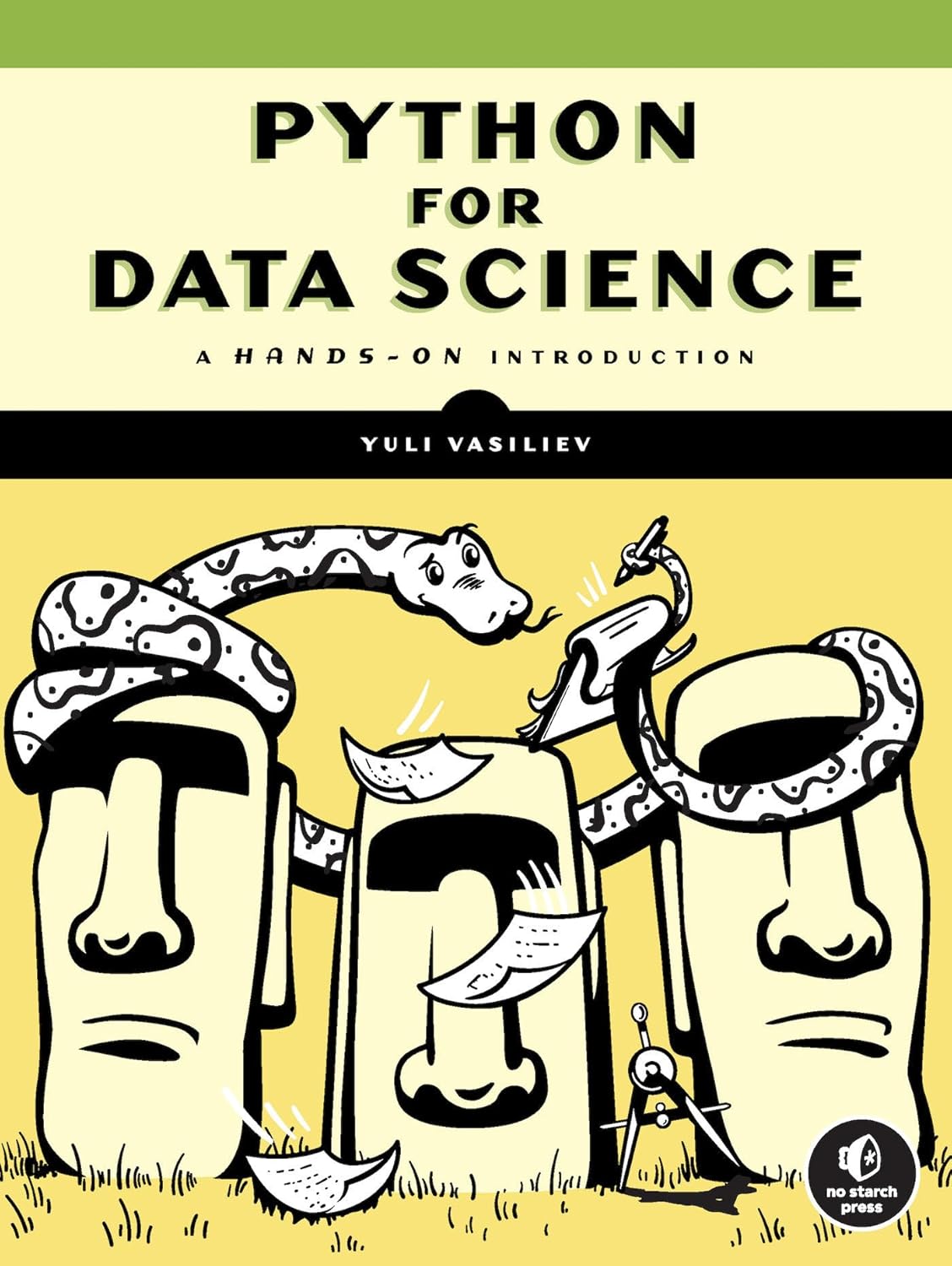
Python for Data Science: A Hands-On Introduction
Original price was: $59.99.$30.45Current price is: $30.45.
Related Products



A hands-on, real-world introduction to data analysis with the Python programming language, loaded with wide-ranging examples.
Python is an ideal choice for accessing, manipulating, and gaining insights from data of all kinds. Python for Data Science introduces you to the Pythonic world of data analysis with a learn-by-doing approach rooted in practical examples and hands-on activities. You’ll learn how to write Python code to obtain, transform, and analyze data, practicing state-of-the-art data processing techniques for use cases in business management, marketing, and decision support.
You will discover Python’s rich set of built-in data structures for basic operations, as well as its robust ecosystem of open-source libraries for data science, including NumPy, pandas, scikit-learn, matplotlib, and more. Examples show how to load data in various formats, how to streamline, group, and aggregate data sets, and how to create charts, maps, and other visualizations. Later chapters go in-depth with demonstrations of real-world data applications, including using location data to power a taxi service, market basket analysis to identify items commonly purchased together, and machine learning to predict stock prices.
Publisher : No Starch Press
Publication date : August 2, 2022
Language : English
Print length : 240 pages
ISBN-10 : 1718502206
ISBN-13 : 978-1718502208
Item Weight : 15.2 ounces
Dimensions : 7.05 x 0.71 x 9.25 inches
Best Sellers Rank: #272,512 in Books (See Top 100 in Books) #65 in Data Mining (Books) #115 in Computer Programming Languages #190 in Python Programming
Customer Reviews: 4.6 4.6 out of 5 stars (58) var dpAcrHasRegisteredArcLinkClickAction; P.when(‘A’, ‘ready’).execute(function(A) { if (dpAcrHasRegisteredArcLinkClickAction !== true) { dpAcrHasRegisteredArcLinkClickAction = true; A.declarative( ‘acrLink-click-metrics’, ‘click’, { “allowLinkDefault”: true }, function (event) { if (window.ue) { ue.count(“acrLinkClickCount”, (ue.count(“acrLinkClickCount”) || 0) + 1); } } ); } }); P.when(‘A’, ‘cf’).execute(function(A) { A.declarative(‘acrStarsLink-click-metrics’, ‘click’, { “allowLinkDefault” : true }, function(event){ if(window.ue) { ue.count(“acrStarsLinkWithPopoverClickCount”, (ue.count(“acrStarsLinkWithPopoverClickCount”) || 0) + 1); } }); });
7 reviews for Python for Data Science: A Hands-On Introduction
Add a review

Original price was: $59.99.$30.45Current price is: $30.45.
Shopper –
Very good
Good introduction to data science
Michael Tribble –
good information
excellent infor
sijo –
Skip this one
This book is not written well. I would skip this book and find other resources for your learning.
Jim Bob –
It’s just bad, pick something else.
While I realize this is not a strictly “beginner” guide to python, the second chapter is very confusing for someone looking to refresh their memory. There are several examples in natural language processing that suddenly whip out coding concepts and ideas that are not explained or introduced. It’s hard to tell if the author is just showing you what you can do when the concepts in the book and will teach you the details later or if you’re supposed to fully grasp things later on. For example, the basics of what lists are is explained, but then list comprehensions get whipped out of nowhere with no explanation- a much harder concept for a beginner. And similarly, when you hit dictionaries in the next section a lambda function gets whipped out with no explanation other than that this magical sequence of commands does something. No explanation of what, exactly, that lambda thing does. It’s a bit overwhelming to a person who is just starting out in their second foray into python.As I move through, chapter 3 was smooth, but chapter 4 on data opening was a mess. Even copy pasting code out of their github gave all manner of errors. There is also a spot where it pings a github URL and it’s just utterly broken, giving over 1500 lines in response. It’s just so sloppily written…Moving further in the book, it does improve a bit, though at times it feels more like I’m copy pasting code and just running it instead of understanding what is being done by certain commands, which are sometimes whipped out of thin air.Chapter 12 is also a big mess. It tells you to scrape amazon reviews with a particular tool, but the features of the tool are now behind a paywall, otherwise you can’t see the key dependent variable. It also askes you to use google-translate-new, but that wasn’t working either anymore, you had to use a different plugin.A bigger issue I have with this book, though, is that it somewhat bizarrely omits much discussion of dealing with real data with common statistical techniques. How do you detect and handle missing data? It really isn’t addressed. How do you run a regression model or ANOVA or T-test? No clue. It’s strange that the book is clearly built with the intention of using statistical techniques, but the basic repertoire of essential econometrics techniques are all but ignored. It’s really to the detriment, too. In chapter 10, you’ve got data on stock prices and volume. The technique used to determine if there is a correlation between past volume and future prices is to compare averages between two groups (ok), but then it goes on to have you do another exercise where you’re literally just eyeballing a pile of data to see if there is a difference. This would have been a perfect spot to do something like a regression of the lagged data onto the future stocks. Cmon!Of course, in the last machine learning chapter, you actually do that idea of predicting things with lags in a ML model. But…the book ends on this model and, hilariously, it doesn’t show you any diagnostics that they previously taught you to use. I wonder why? Oh, it’s because the moment you do Sklearn starts throwing errors because the model literally only predicts 0’s, not -1 or 1 like anticipated. The model presented in the book is both broken and comically misleading to the point of being a waste of the reader’s time.
Jessica Mangiameli –
Don’t waste your time
In this book, the author gives a link to a Github repository for this book claiming that it contains the answers for the practice solutions at the end of each chapter as well as other code files from the chapters – it does not. There are maybe 3 files total in the Github repository. This is something that should have been completed and ready to go with publication. The first few chapters are pretty vague and don’t go too deep into explanation so it’s difficult to tell if you’re coding correctly when there aren’t any solutions for the practice problems. I contacted No Starch Press about this and they said they would contact the author and I never heard anything back after that.
Luke S. –
Avoid this title!
I am a huge fan of No Starch Press, but this book is by far the worst I’ve purchased! There is a reason the publisher stopped selling it on their website shortly after its release. The book reads like it was written at the deadline; the writing is sloppy and lazy. The support files standard with every other title, are missing and the author is unreachable.Avoid this title!!!!
Héctor M. –
Tal como se esperava